UK Road markings are more than just paint on the tarmac; they are the silent instructions that keep UK roads safe. For a learner driver, understanding them is non-negotiable. Whether you are revising for your 2026 theory test or preparing for your practical exam, this guide covers everything the DVSA expects you to know.
UK Road Markings – What Every Theory Test Learner Must Know
Why Road Markings Matter in the UK Theory Test
Many learners focus heavily on UK road signs and neglect UK road markings. This is a critical error. In the real world—and on your test—markings often provide the only warning of upcoming hazards, speed limits, or priority changes. Understanding them ensures you aren’t caught out when signs are obscured or absent.
Move To QuizHow Often Road Marking Questions Appear in DVSA Exams
Based on recent question banks, road marking questions are highly frequent. You can expect roughly 1 in 8 questions to relate directly or indirectly to road markings (e.g., lane discipline, stopping distances, or junction priority).
Purpose of Road Markings in the UK (DVSA Explained)
The Highway Code uses markings to achieve five main goals. Understanding the purpose helps you guess the answer even if you forgot the specific rule:
- Control Traffic Flow: Defining lanes and separating opposing traffic.
- Warn of Hazards: Telling you to slow down before you see the danger.
- Protect Vulnerable Users: Cycle lanes and pedestrian crossings.
- Enforce Laws: Parking restrictions and bus lanes.
- Reduce Accidents: Separating high-speed traffic.
White Line Road Markings (Most Tested in Theory)
White lines are the most common markings you will see. They generally separate traffic moving in the same or opposite directions.
Stop Lines
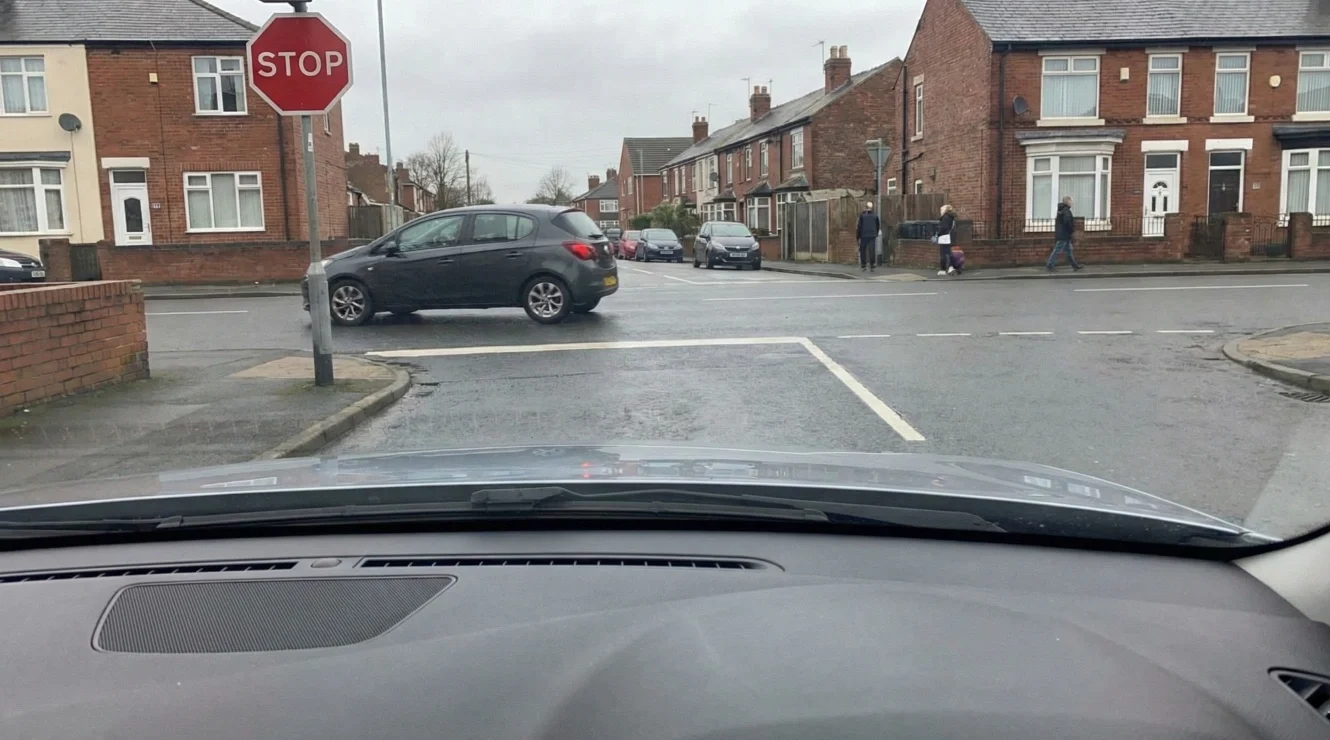
A solid white line running across the road at a junction means STOP.
- Relation to Lights: You must stop behind this line at traffic lights.
- Theory Trap: Even if the road looks clear, you must come to a complete halt at a Stop line (unlike a Give Way line where you can crawl if clear).
Give Way Lines
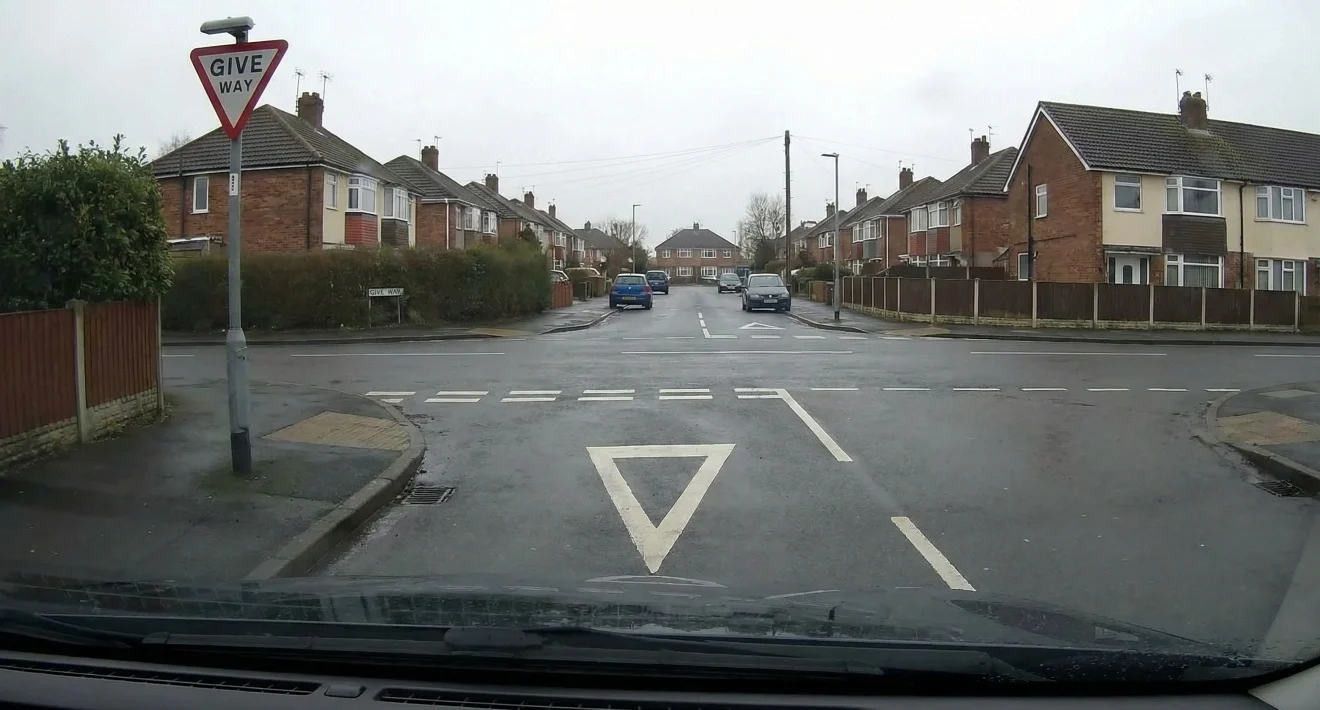
These are broken (dashed) white lines across the road.
- Double Broken Lines: Often found at roundabouts or busy junctions; they emphasize that you must give way.
- Triangle Marking: Usually accompanied by a painted inverted triangle on the road.
Lane Divider Lines
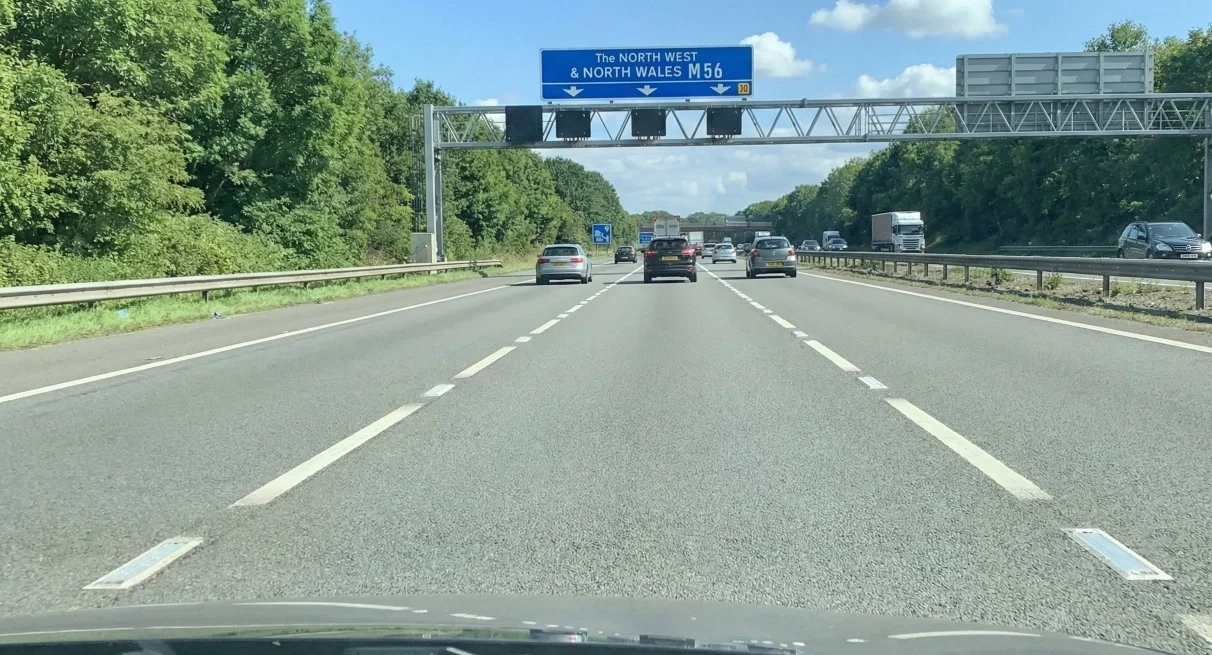
Short, regular broken white lines in the middle of the road. They separate lanes. You should keep to the left unless overtaking or turning.
Continuous and Broken White Lines
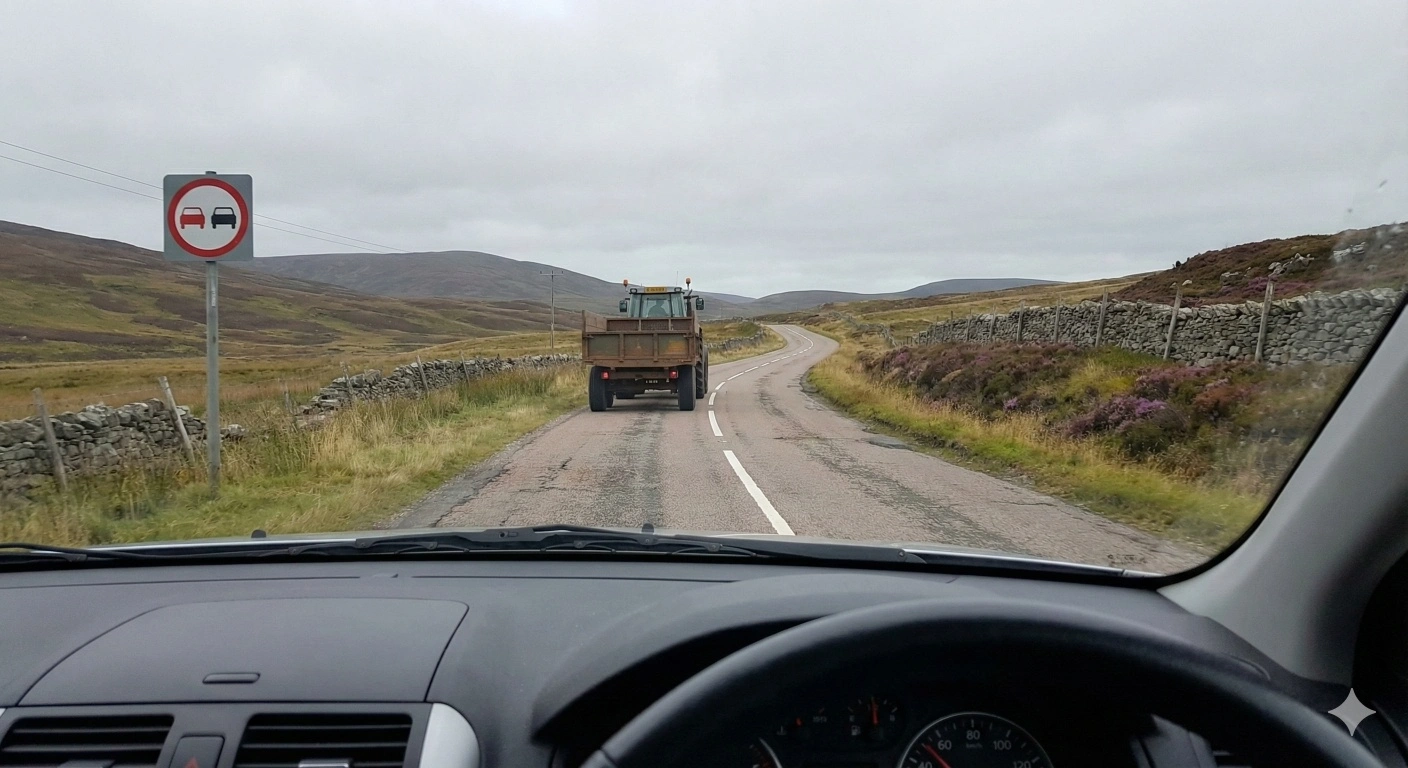
Important: If the gaps between the lines lengthen and the painted lines become longer, a hazard is approaching. This could be a bend or a hill. Do not cross these unless you can see clearly ahead.
A single continuous solid white line in the centre of the road is rare but strict. You must not cross it to overtake.
Double White Lines
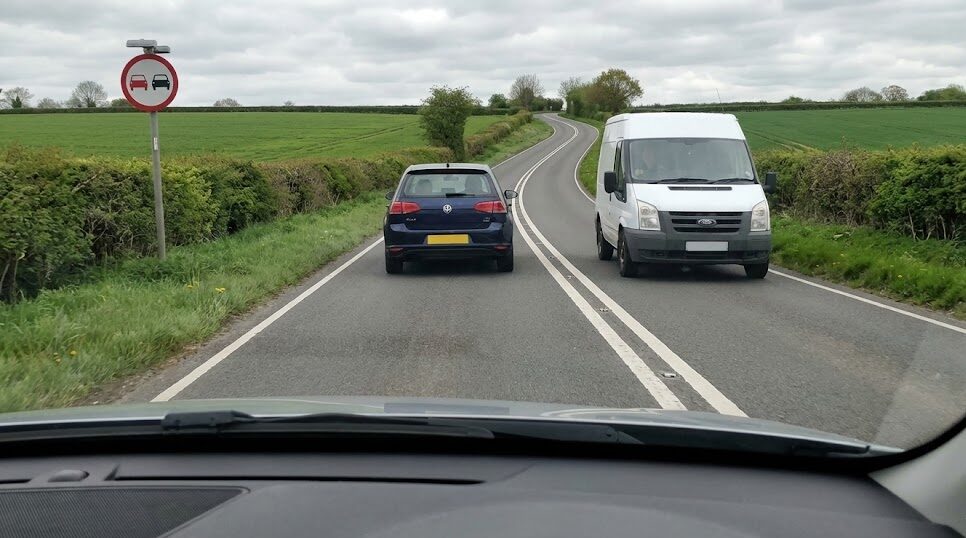
This is a classic exam topic.
- Solid on your side: You must not cross or straddle the line.
- Broken on your side: You may cross to overtake if it is safe.
- Solid on BOTH sides: No overtaking for either direction.
The 3 Legal Exceptions (Memorize This!):
Crossing a solid white line is allowed ONLY to:
- Turn right into a side road or property.
- Pass a stationary vehicle (e.g., a broken-down car).
- Overtake a horse, cyclist, or road maintenance vehicle travelling at 10 mph (16 km/h) or less.
Zigzag Road Markings (High-Penalty Areas)
Zigzags are strictly enforced because they protect human life.
White Zigzag Lines
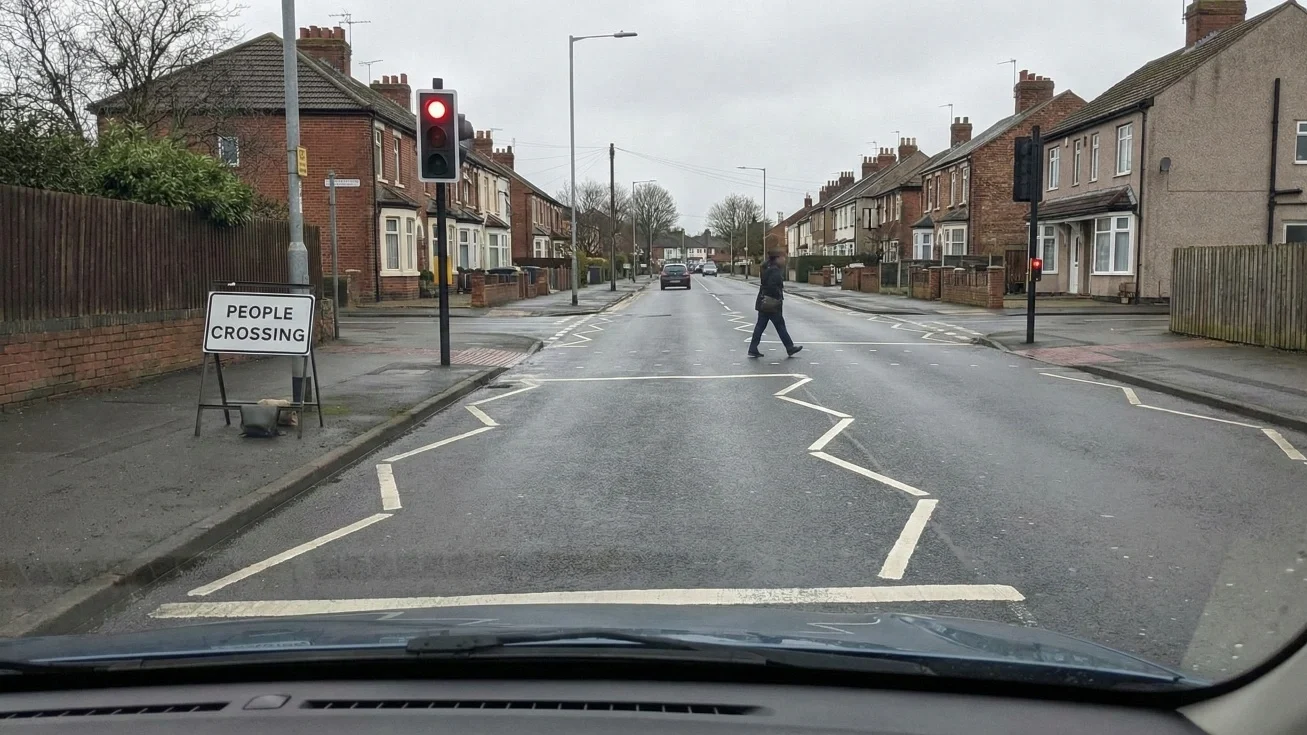
Found at Zebra, Pelican, and Puffin crossings.
- The Rule: You must NOT park, wait, or overtake the lead vehicle in this area.
- The Penalty: Police enforce this strictly with penalty points and fines because a blocked view here kills pedestrians.
School Keep Clear Markings
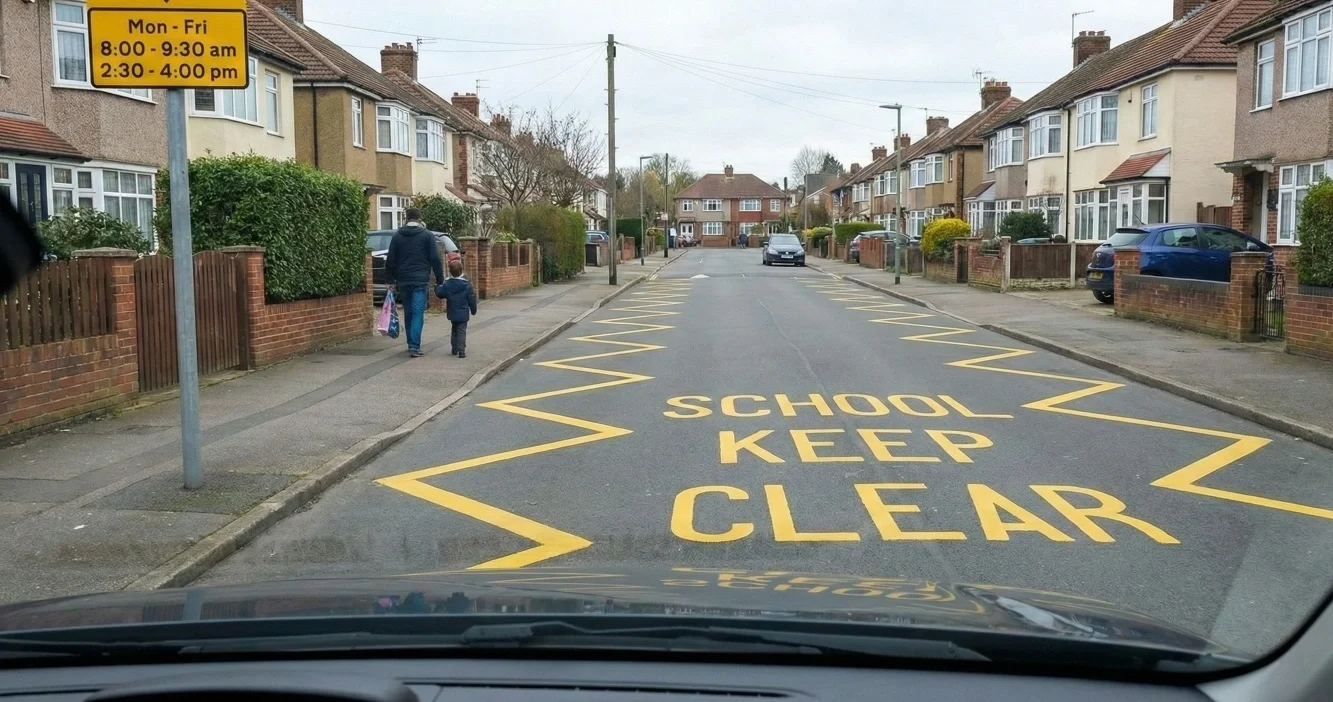
Yellow zigzags outside schools.
- Rule: Do not stop here, even to drop off passengers.
- Time: Often accompanied by a sign indicating operational hours (e.g., “Mon-Fri 8:00 – 17:00”).
Yellow & Red Road Markings (Parking & Stopping Rules)
These markings appear at the edge of the road (kerb) and dictate where you can park.
Single Yellow Lines
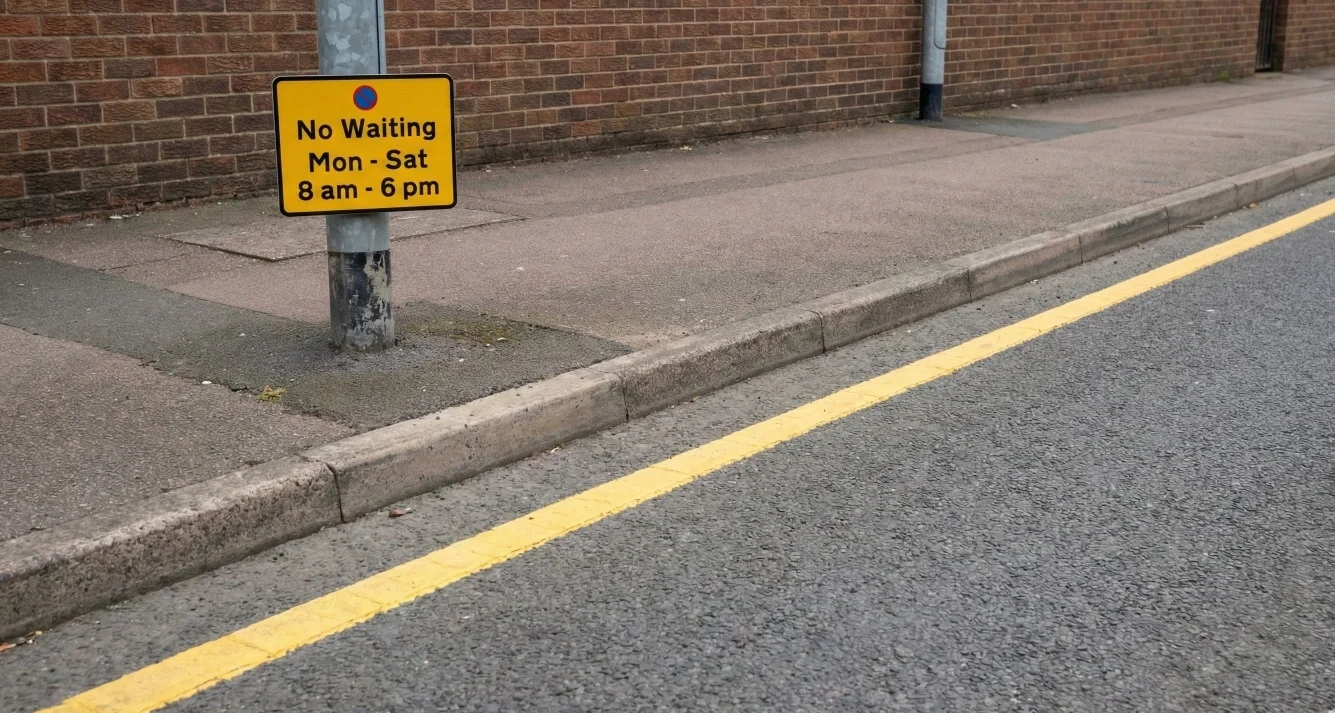
- Meaning: Parking restrictions apply at specific times.
- Sign Dependency: You must look for a nearby yellow time plate to know exactly when the restriction is active.
Double Yellow Lines
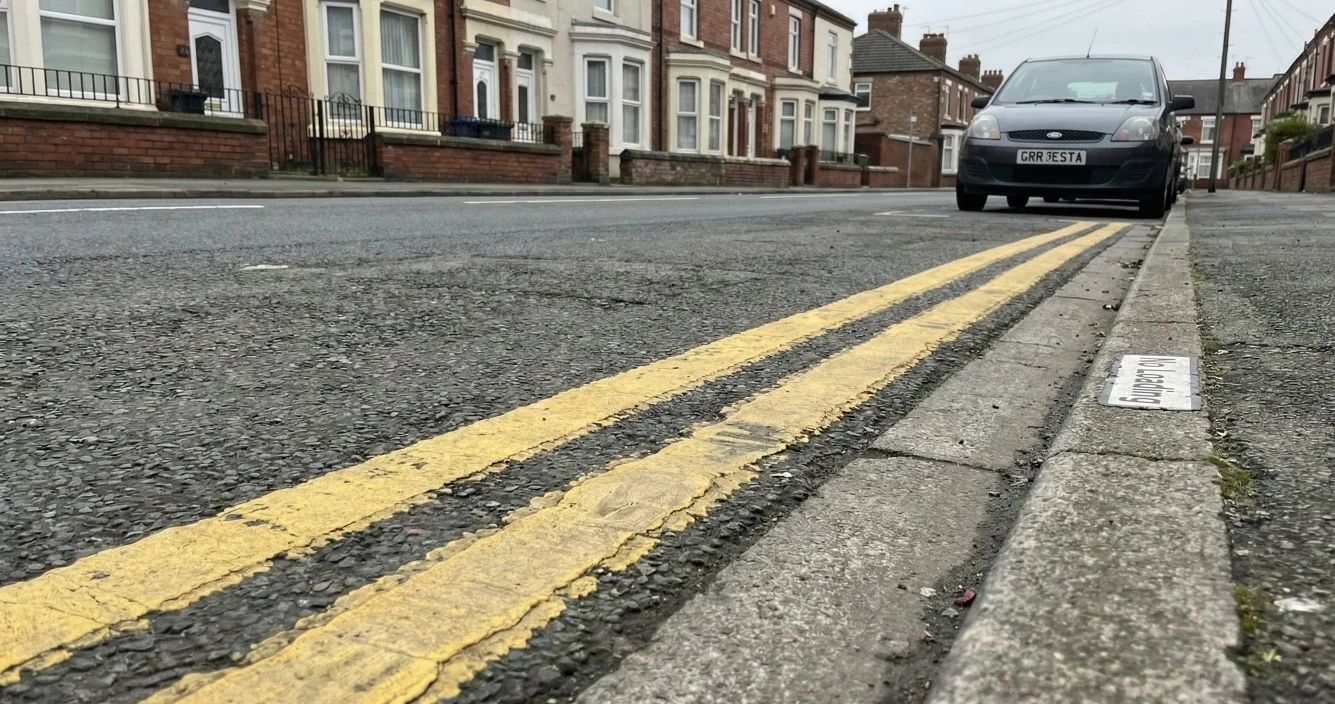
- Meaning: No waiting or parking at any time.
- Myth Buster: You can stop briefly to load/unload heavy goods or pick up/drop off passengers, but you cannot wait. (Exceptions apply where “No Loading” pips exist on the kerb).
Red Lines (Red Routes)
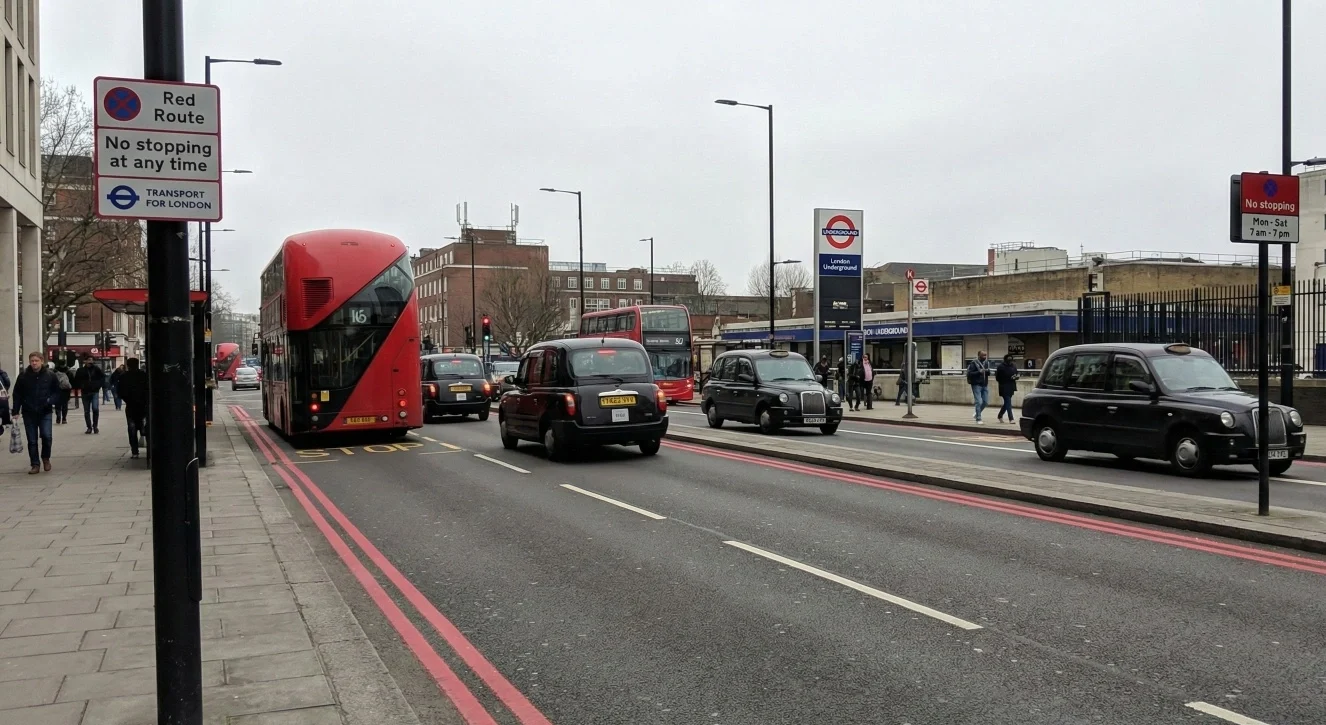
Common in London and major cities to keep traffic moving.
- Double Red Lines: No stopping at any time (stricter than double yellow).
- Single Red Lines: No stopping during the times shown on signs.
- Why? To prevent congestion on major arteries.
Edge & Centre Line Markings
Edge Lines
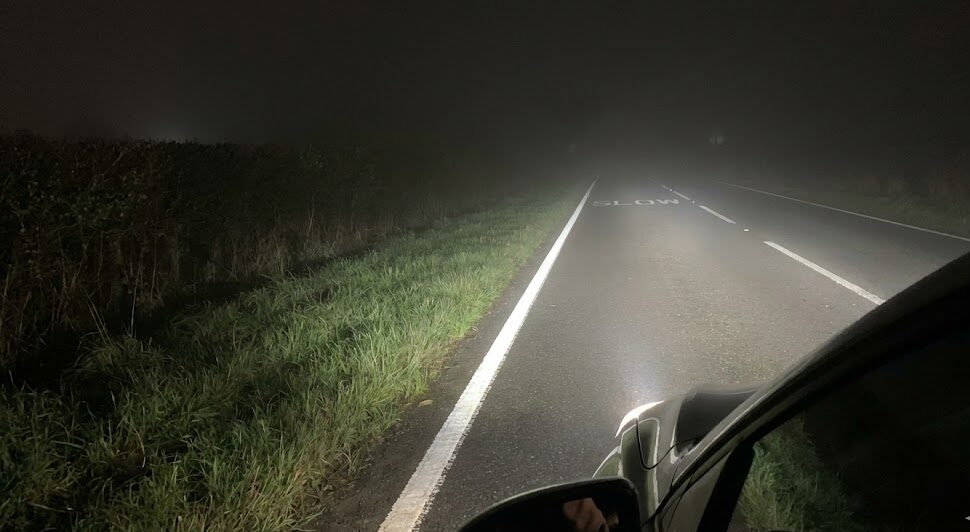
A solid white line along the left edge of the road.
- Purpose: Helps you see the edge of the road at night or in fog.
- Rule: Do not cross onto the verge/grass.
Centre Lines (Hazard Warning)
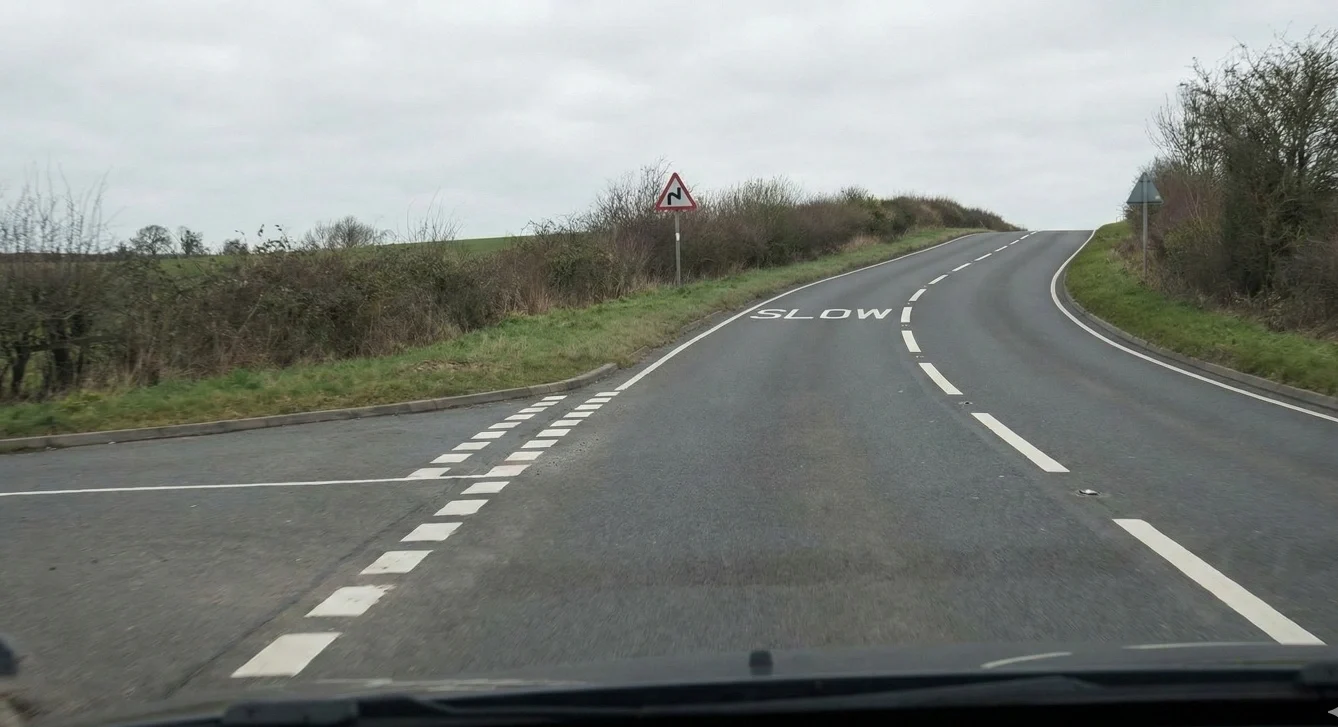
As mentioned earlier, watch the spacing.
- Short lines, long gaps: Standard lane divider.
- Long lines, short gaps: Hazard ahead! Prepare to slow down; overtaking is becoming dangerous.
Special Lane Markings (Modern UK Roads)
The 2026 theory test includes modern road usage rules.
Bus Lane Markings
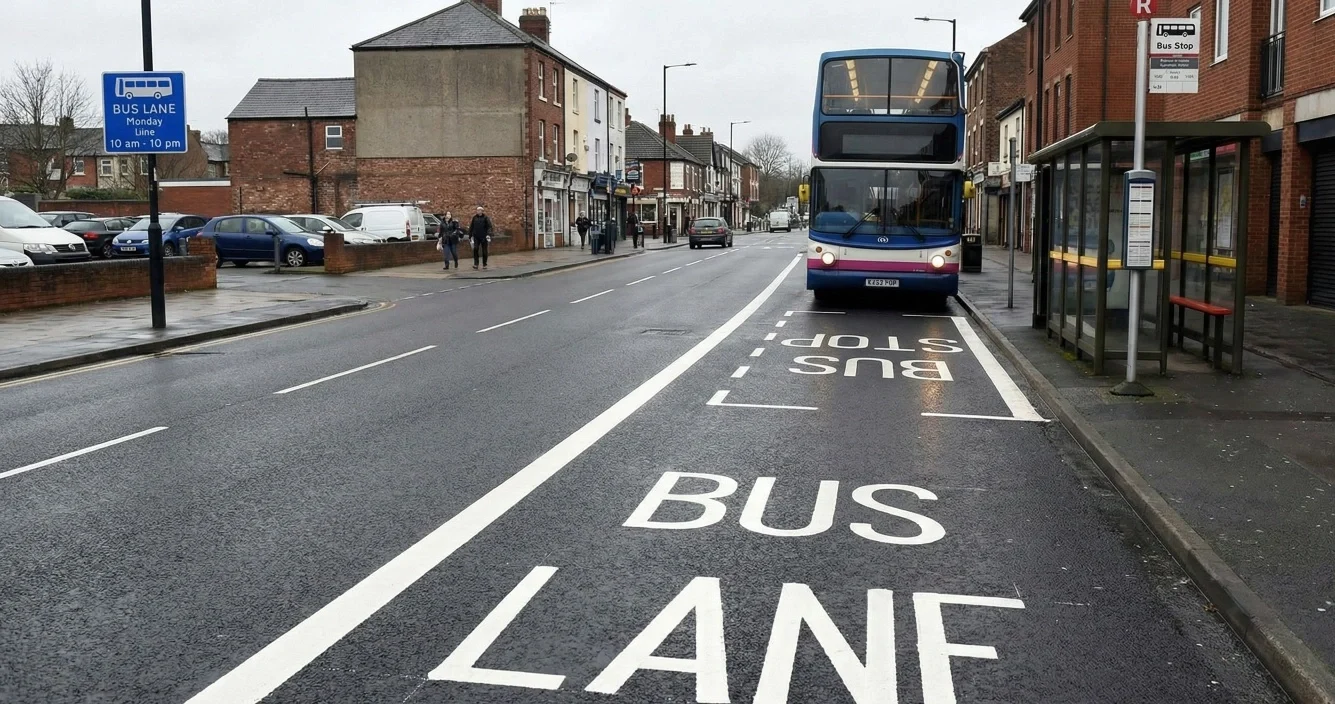
- Solid White Line: You must NOT enter during the lane’s operational hours.
- Broken White Line: You may enter (usually near a turn), but give priority to buses.
- Check the Sign: If no times are shown, the bus lane is in operation 24 hours a day.
Cycle Lane Markings
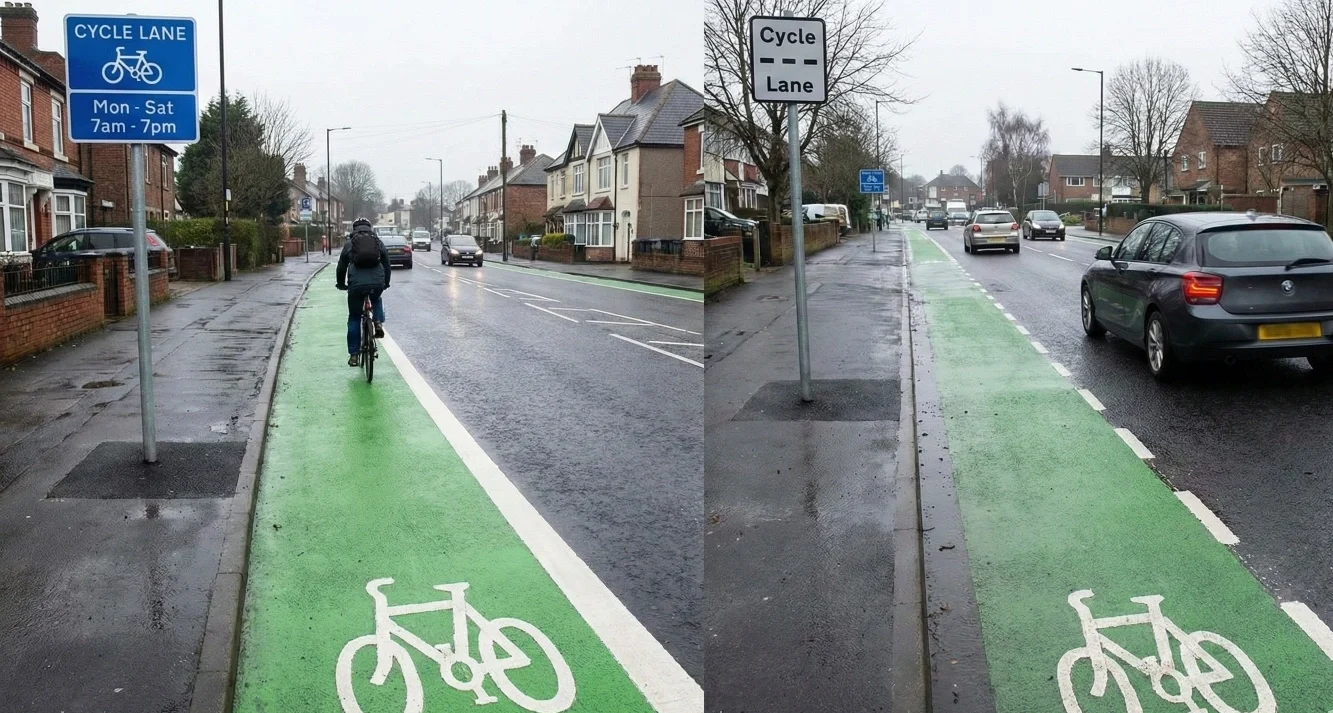
- Solid Line (Mandatory): You must not drive or park in this lane.
- Broken Line (Advisory): You should not drive in it unless unavoidable.
Green Coloured Lanes
You may see green paint on slip roads or cycle areas.
- Meaning: This is emphasized for visibility. It does not change the legal status of the line (solid vs broken), but it highlights that this lane is prioritized for specific vehicles (like bikes or exiting traffic).
Pedestrian Crossing Markings (Very High Exam Value)
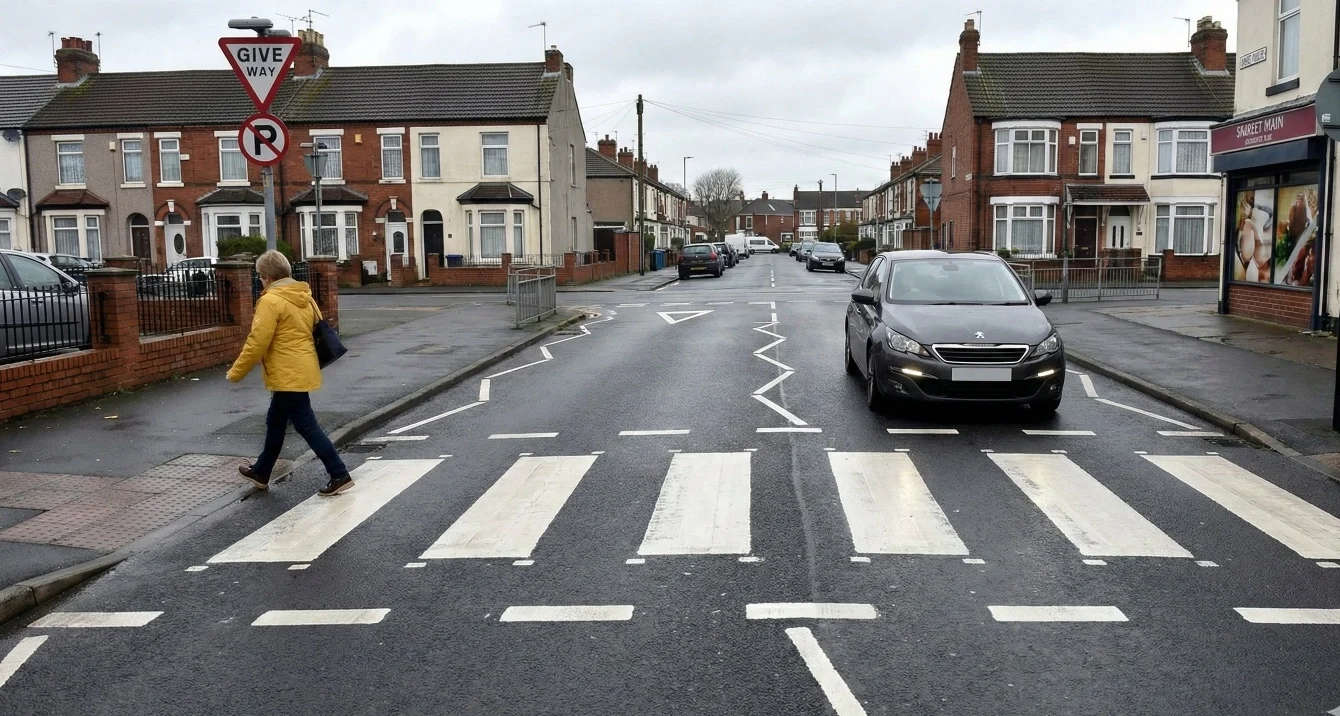
Zebra Crossings
Identified by alternating black and white road bands.
- Driver Duty: You must give way once a pedestrian has stepped onto the crossing.
- Zigzags: Never park on the approach.
Pedestrian Crossings with Stop Lines
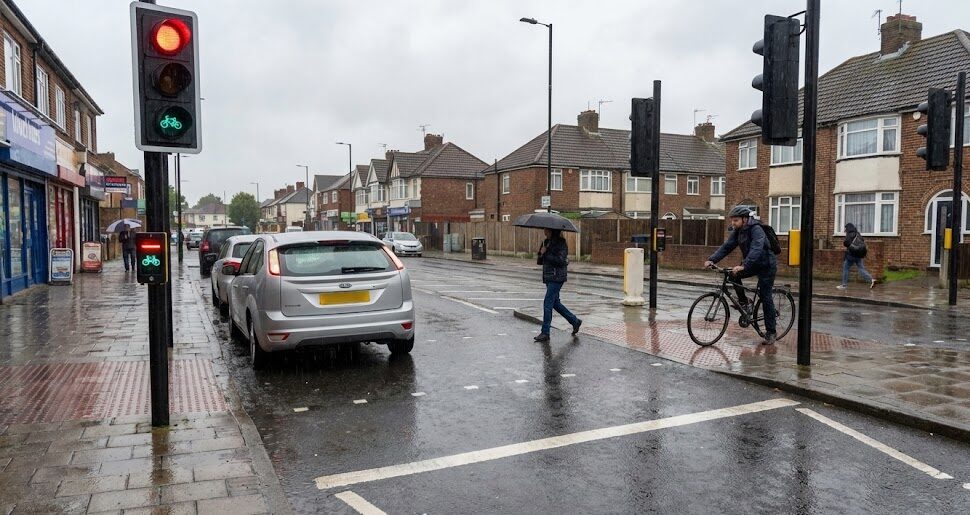
Pelican, Puffin, and Toucan crossings use traffic lights. You must stop behind the solid white line when the light is red.
Parking Bay Markings in the UK
White Bay Markings
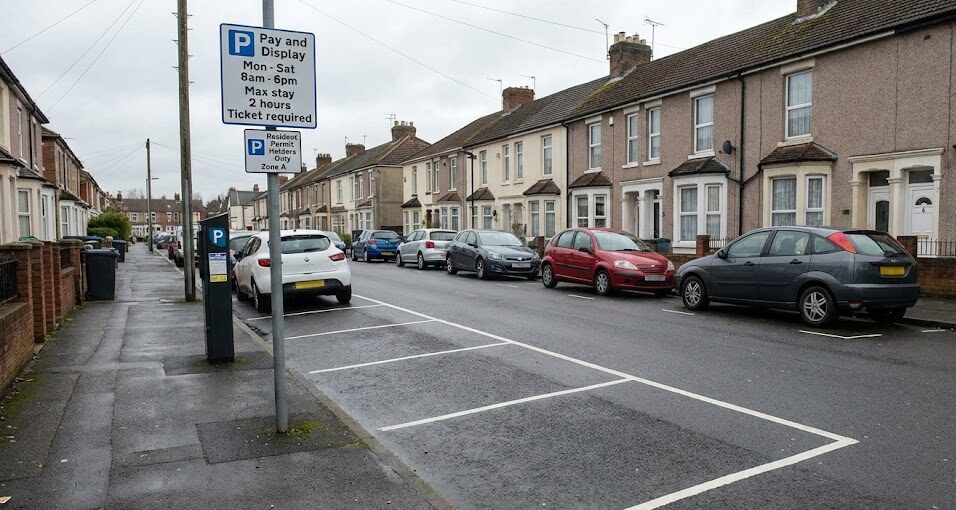
Marked bays indicate where parking is permitted. Look for “Pay and Display” or “Residents Only” signage to verify specific parking rules.
Disabled Parking Bays
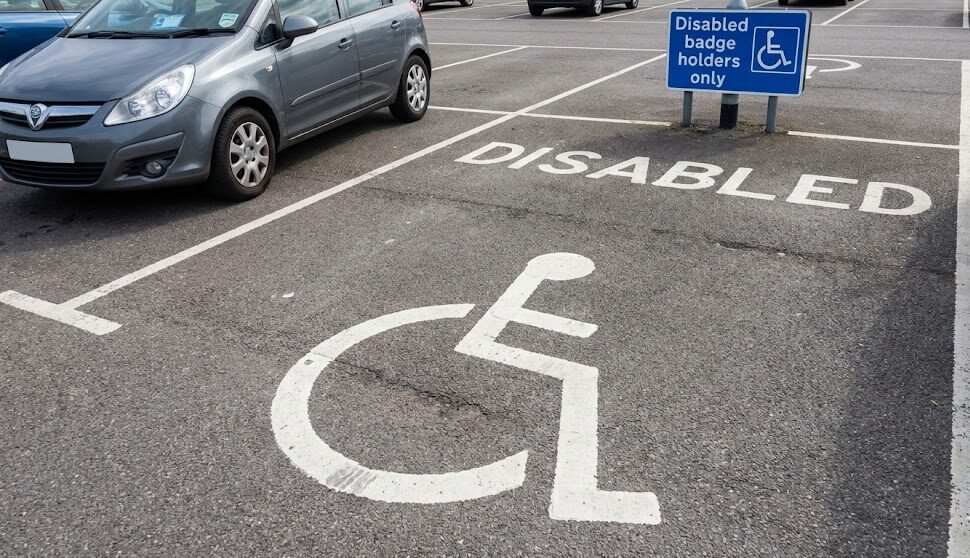
Marked with “DISABLED”.
- Rule: Only holders of a valid Blue Badge may park here.
- Penalty: Using these without a badge is a common reason for parking fines.
EV Charging Bays
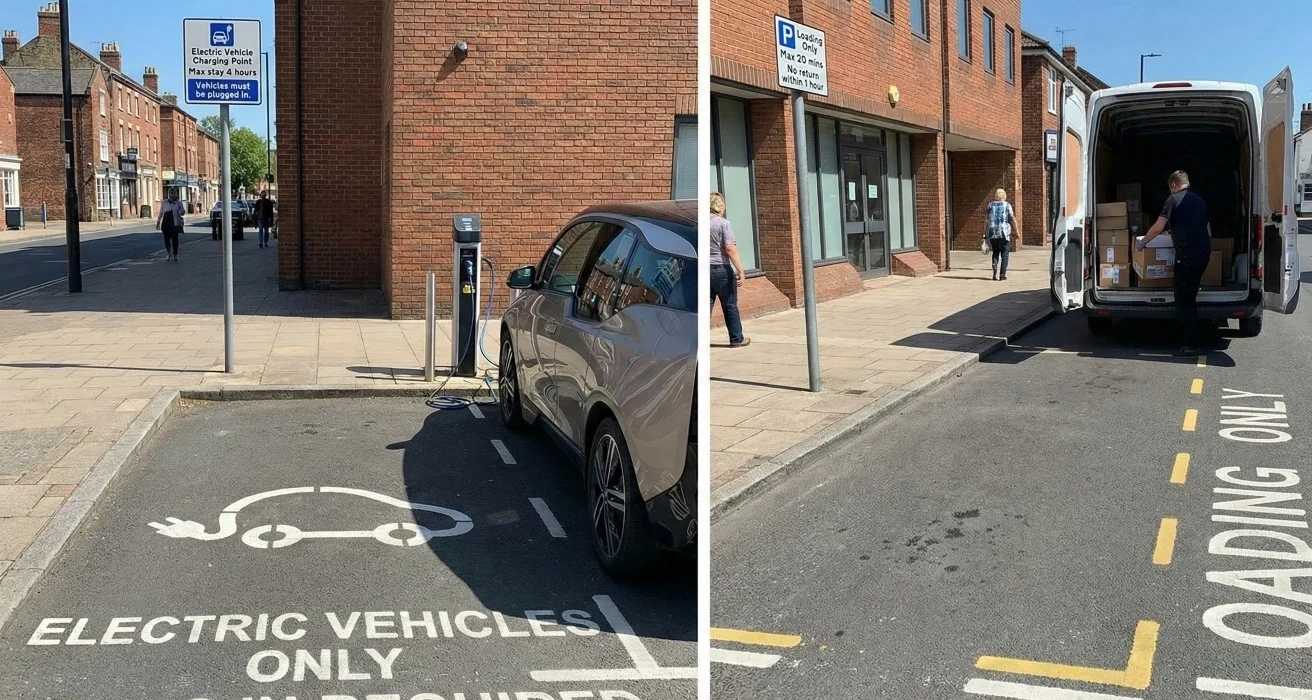
Marked for “Electric Vehicles”.
- Trap: You can usually only park here while charging. Using the space without plugging in can result in a fine.
Loading Bays
Marked “Loading Only”. These are strictly for goods vehicles or active loading. They are distinct from yellow lines.
Chevron Markings & Hatched Areas
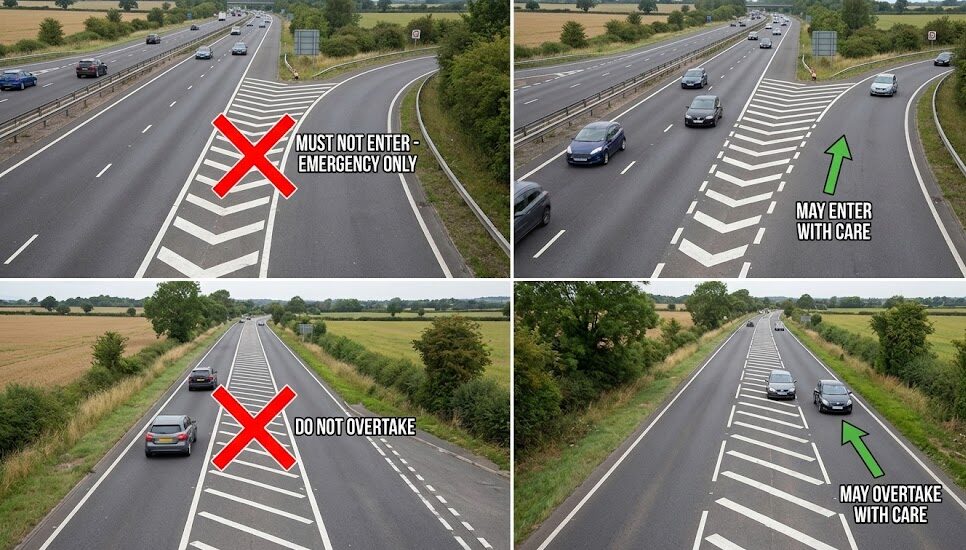
Chevron Markings
These separate traffic lanes moving in the same direction (e.g., motorway exits).
- Bordered by Broken Lines: You should not enter unless necessary and safe.
- Bordered by Solid Lines: You MUST NOT enter except in an emergency.
Blockwork / Diagonal Hatching
Often found in the centre of rural roads to separate traffic further. Do not use this area for overtaking unless bordered by broken lines and absolutely necessary.
Speed Limit Road Markings
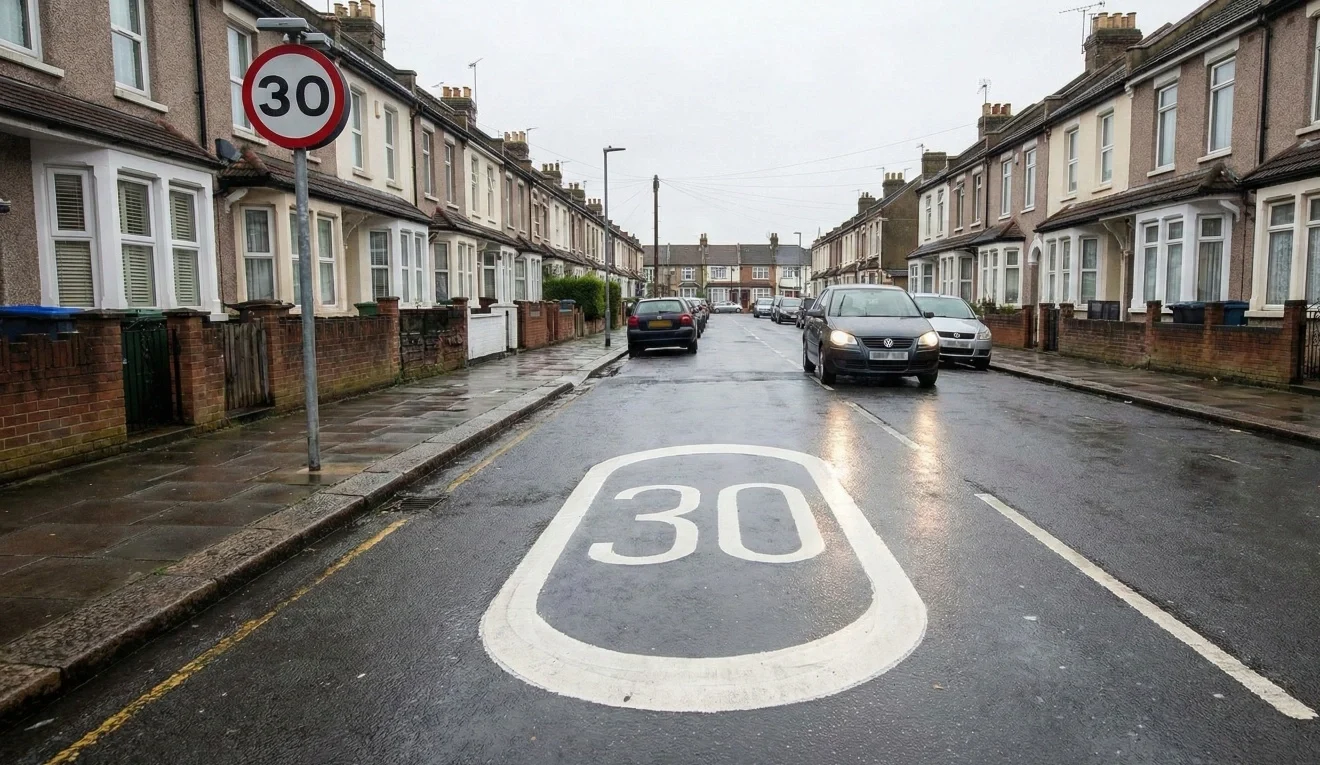
Sometimes speed limits are painted directly on the road surface in an elongated white circle.
- Purpose: To reinforce the speed limit shown on signs.
- Repeater: These are common where speed limits change (e.g., entering a 30mph zone).
Temporary Road & Construction Zone Markings
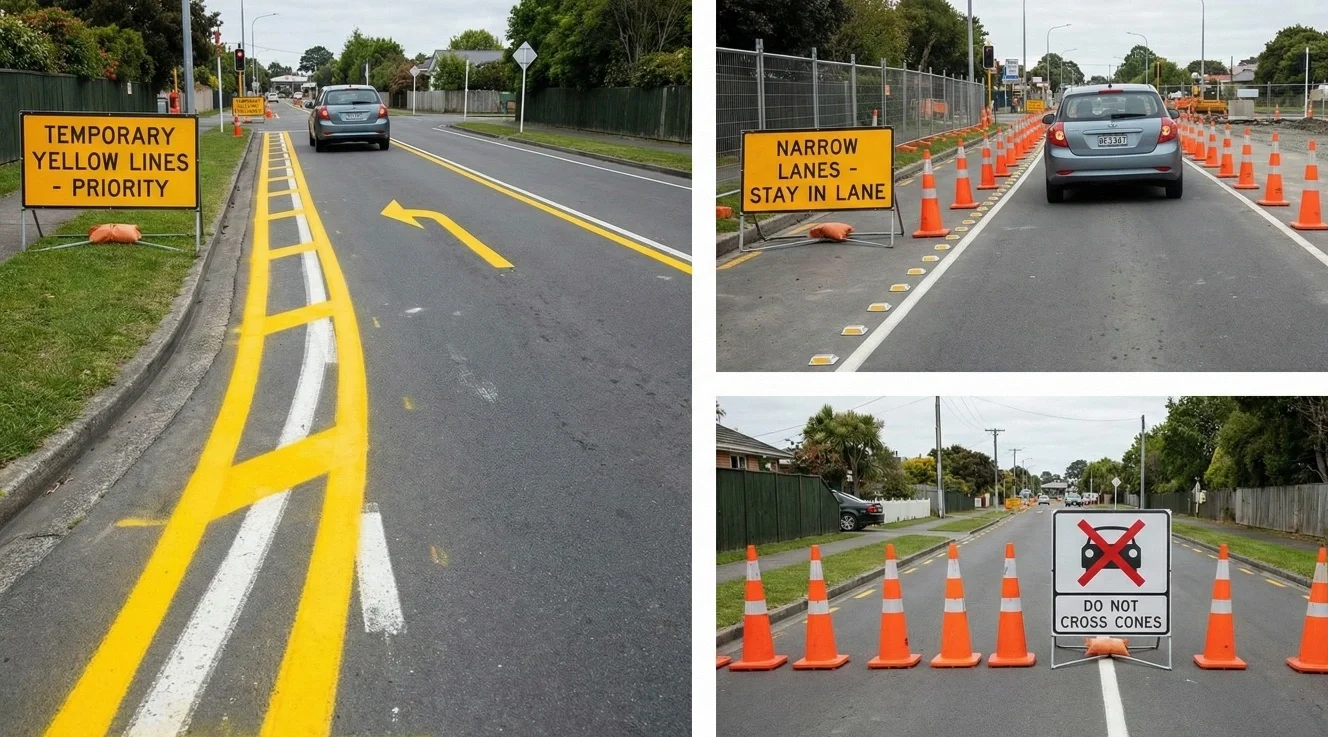
Construction zones can be confusing.
- Yellow Lines: Temporary yellow markings take priority over existing white markings. Follow the yellow lines!
- Narrow Lanes: Stay within the temporary studs or lines.
- Cones: Do not cross the line of cones.
Quick Road Markings Cheat Sheet (Theory Test View)
If you are short on time, memorize this table. These are the “Big 5” that frequently trip up learners.
| Marking / Type | Colour | Meaning & Rule | Can You Cross? |
| Double White (Solid) | White | Do not cross or straddle. | NO (Strict). |
| Give Way Line | White | Give priority to traffic on the major road. | YES (After checking). |
| Zigzag Lines | White | Pedestrian crossing approach. No parking or overtaking. | NO. |
| Double Yellow | Yellow | No parking or waiting at any time. | N/A (Edge rule). |
| Box Junction | Yellow | Do not enter unless your exit is clear. | NO (Unless turning right). |
| Red Routes | Red | Strict “No Stopping” rules (often in cities). | N/A (Edge rule). |
| Green Lanes | Green | Emphasized lane (Cycle or Slip Road). | YES (Check white lines). |
| Temporary Markings | Yellow | Roadworks and construction paths. | YES (Follow them). |
Practice Quiz – UK Road Markings (Free)
Ready to test your knowledge? Don’t risk a fail by guessing.
Results


#1. You are driving on a road with a double solid white line in the centre. When are you allowed to cross it?
You may cross a solid double white line to pass a stationary vehicle, or to overtake a pedal cycle, horse, or road maintenance vehicle travelling at 10 mph (16 km/h) or less, provided it is safe.
#2. What does a single continuous yellow line along the edge of the road mean?
A single yellow line means waiting restrictions apply at certain times. You must check the nearby time plate (sign) to see exactly when these restrictions are in force.
#3. You see white zigzag lines at the side of the road. What do they indicate?
White zigzag lines mark the approach to a pedestrian crossing. You must not park or overtake in this area as it blocks the view of pedestrians.
#4. What is the meaning of a double yellow line painted along the kerb?
Double yellow lines mean no waiting or parking is allowed at any time, 24 hours a day, 365 days a year.
#5. You are approaching a junction. There is a solid white line across the road. What must you do?
A solid white line running across the road at a junction or Stop sign means you must come to a complete halt, even if the road appears clear.
#6. What does a broken white line with long markings and short gaps in the centre of the road indicate?
When the white centre lines become longer and the gaps between them become shorter, it warns that a hazard (like a bend or hill) is ahead. You should not cross them unless you can see clearly.
#7. You are entering a box junction with criss-cross yellow lines. When are you allowed to wait in the box?
You must not enter a box junction unless your exit is clear. The only exception is if you are turning right and are stopped by oncoming traffic or other vehicles also waiting to turn right.
#8. What does a solid white line bounding the left edge of the carriageway indicate?
A solid white line on the left often marks the edge of the carriageway to help drivers see the road limit, especially at night or in bad weather.
#9. You are driving on a motorway. What colour are the reflective studs (cat’s eyes) between the hard shoulder and the left-hand lane?
Red studs mark the left edge of the road (between the driving lanes and the hard shoulder). They warn you not to veer off the carriageway.
#10. What do yellow zigzag lines outside a school indicate?
Yellow zigzags outside schools mean ‘School Keep Clear’. You must not stop or park there, usually during school hours, to protect children.
#11. You see an area of road marked with diagonal white stripes (hatched markings) bordered by a broken white line. What should you do?
If the area is bordered by a broken white line, you should not enter it unless it is necessary and you can see that it is safe to do so.
#12. What does a red route (double red lines) mean?
Double red lines mean no stopping, waiting, or loading is permitted at any time. These are strictly enforced to keep traffic moving on busy routes.
#13. A cycle lane is marked by a solid white line. When are you allowed to drive in it?
You must not drive or park in a mandatory cycle lane (marked by a solid white line) during its hours of operation.
#14. What is the purpose of a green coloured area on the road surface?
Coloured road surfaces (often green or red) are used to emphasize special lanes like bus or cycle lanes, alerting drivers to be aware of vulnerable road users.
#15. You are on a motorway. What colour are the reflective studs between the central reservation and the right-hand lane?
Amber studs mark the right-hand edge of the road, separating the fast lane from the central reservation.
#16. What does a curved arrow on the road surface indicate?
Deflection arrows (curved arrows) warn you that you need to move back into the left lane, usually because a hazard is ahead or the overtaking lane is ending.
#17. You see a ‘Give Way’ triangle painted on the road. What usually accompanies this marking?
A ‘Give Way’ triangle on the road is usually accompanied by double broken white lines across the junction, indicating you must give priority to traffic on the major road.
#18. Can you park on the pavement (footpath) marked with yellow lines?
In London and many other areas, parking on the pavement is illegal regardless of road markings. Elsewhere, it should be avoided as it obstructs pedestrians and wheelchairs.
#19. You are driving in roadworks. You see temporary yellow road markings. What should you do?
Temporary yellow road markings at roadworks override existing white markings. You must follow the yellow lines.
#20. What do white diagonal stripes bordered by a SOLID white line mean?
If a hatched area is bordered by a solid white line, you must not enter it except in an emergency.
#21. What does a grid of yellow criss-cross lines indicate?
Yellow criss-cross lines mark a box junction. These are used to keep junctions clear and prevent gridlock.
#22. On a three-lane motorway what colour are the reflective studs between the lanes?
White reflective studs mark the lanes or the middle of the road. They separate the driving lanes from each other.
#23. You are waiting at traffic lights in an area marked for cyclists (Advanced Stop Line). When can you enter this box?
You should stop at the first white line. You can only enter the cyclist box if the light changes to amber/red and you cannot safely stop behind the first line, or if the light is green and you are moving through.
#24. What does a ‘Bus Stop’ road marking indicate?
Markings saying ‘Bus Stop’ usually mean no other vehicles can stop there. This is to ensure buses can pull in safely to pick up passengers.
#25. When can you cross a double white line where the line nearest to you is broken?
If the line nearest to you is broken, you may cross it to overtake, provided you can complete the manoeuvre safely and before a solid line reappears.
Road Markings – Common Learner Mistakes
- Zigzag Confusion: Many learners think they can stop on zigzags to pick up a friend. This is illegal.
- Double White Line Myths: Believing you can never cross them. Remember the “turning right” and “10mph” exceptions.
- Yellow Line Loading: Thinking “No Waiting” (yellow lines) means “No Loading”. They are different rules; check the kerb markings!
FAQs – UK Road Markings
Can you cross double white lines?
Only if the line on your side is broken, or if the line is solid and you are turning right, passing a stationary vehicle, or passing a horse/cyclist/maintenance vehicle moving at 10mph or less.
What do zigzag lines mean?
They indicate the approach to a pedestrian crossing. You must not park, wait, or overtake in this zone.
Are green lanes legally different?
No, the green colour is for visibility. The white line bordering the green lane dictates the law (solid = stay out; broken = enter with caution).
Do temporary markings override signs?
Temporary road markings (usually yellow) override existing permanent markings. However, temporary signs also override permanent signs. Always follow the temporary instructions in roadworks.