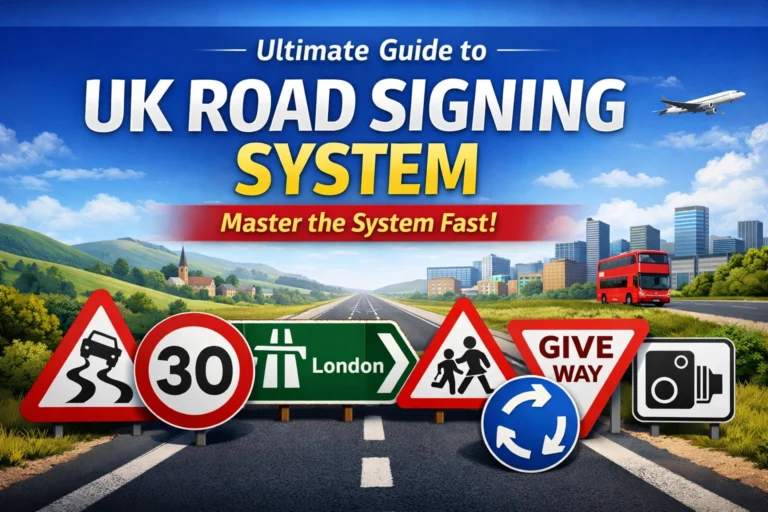
Let’s be honest: the first time you sit behind the wheel and look at a UK road sign, it can feel like you’re trying to read ancient hieroglyphics while travelling at 30mph. Between the circles, triangles, and the rainbow of colours, it’s a lot to take in.
But here is the good news: the UK road signing system is actually incredibly logical. Once you learn the “secret code” of shapes and colors, you’ll be able to read the road like a book.
Whether you’re a learner driver prepping for the theory test or an international driver trying to figure out why that sign is blue, this guide has you covered. Let’s dive in!
Why Road Signs Are Important in the UK
Road signs aren’t just roadside decorations; they are the “language of the road.” They keep traffic flowing, protect pedestrians, and—most importantly—keep you from getting a hefty fine or a couple of points on your license.
In the UK, the system is designed to be recognized quickly without needing to read much text. This is why shapes and colors are so vital. When you’re cruising down the A1, you don’t have time to read a paragraph; you need to know immediately if a hazard is coming up.
Categories of UK Road Signs
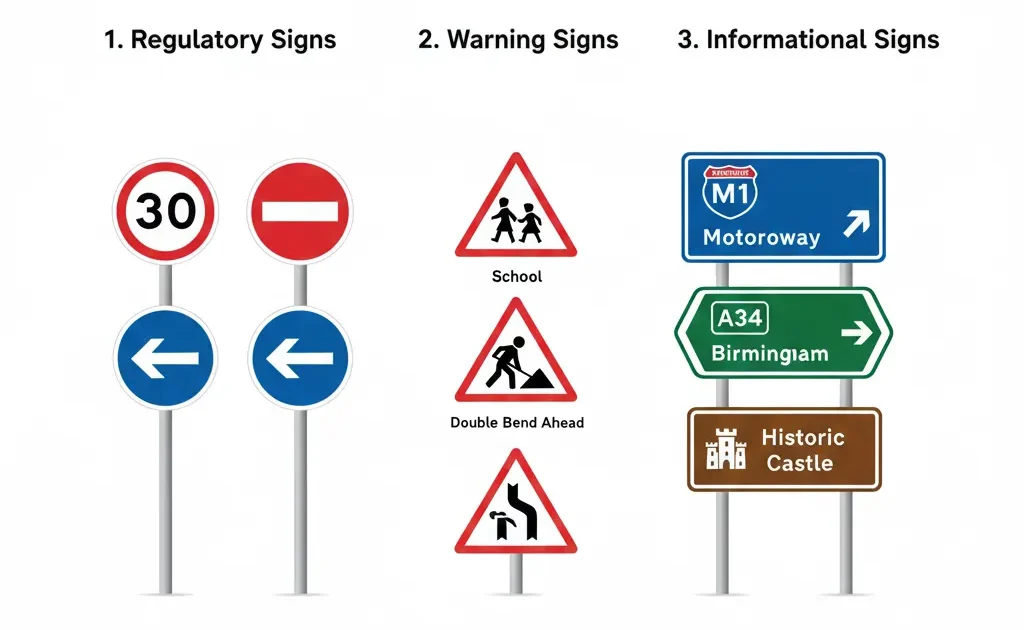
The UK Highway Code breaks signs down into three main categories. If you remember nothing else, remember these three:
- Signs that Give Orders (The Bossy Ones)
- Signs that Warn (The Helpful Ones)
- Signs that Give Information (The Wise Ones)
1. Regulatory Signs: The “Bossy” Circles
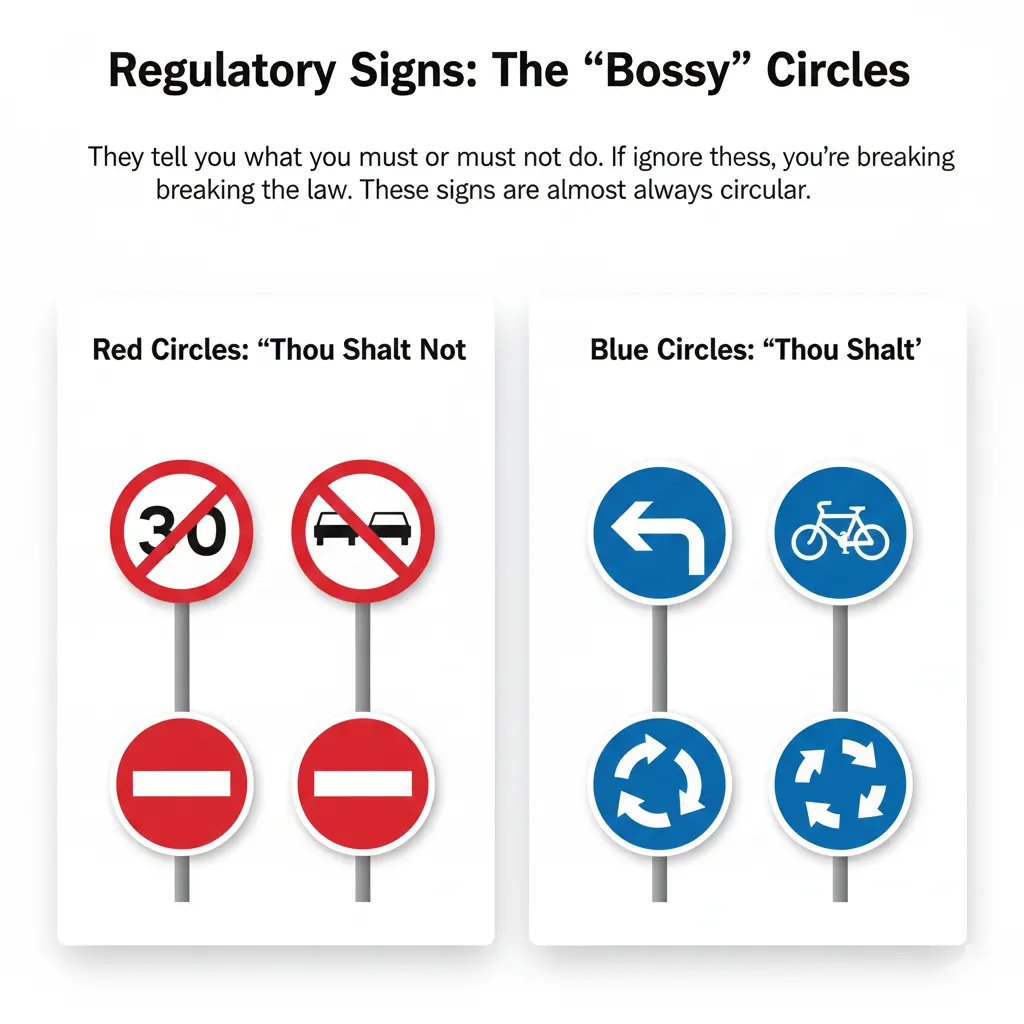
Regulatory signs tell you what you must or must not do. If you ignore these, you’re likely breaking the law. These signs are almost always circular.
Red Circles: “Thou Shalt Not”
If it has a red ring, it’s a prohibition. It’s telling you what you aren’t allowed to do.
- Examples: No entry, no cycling, or speed limits.
- Pro Tip: Think “Red = Refuse.”
Blue Circles: “Thou Shalt”
Blue circles generally give positive instructions. They tell you what you must do or which way you must go.
- Examples: Turn left ahead, mini-roundabout, or “buses only” lanes.
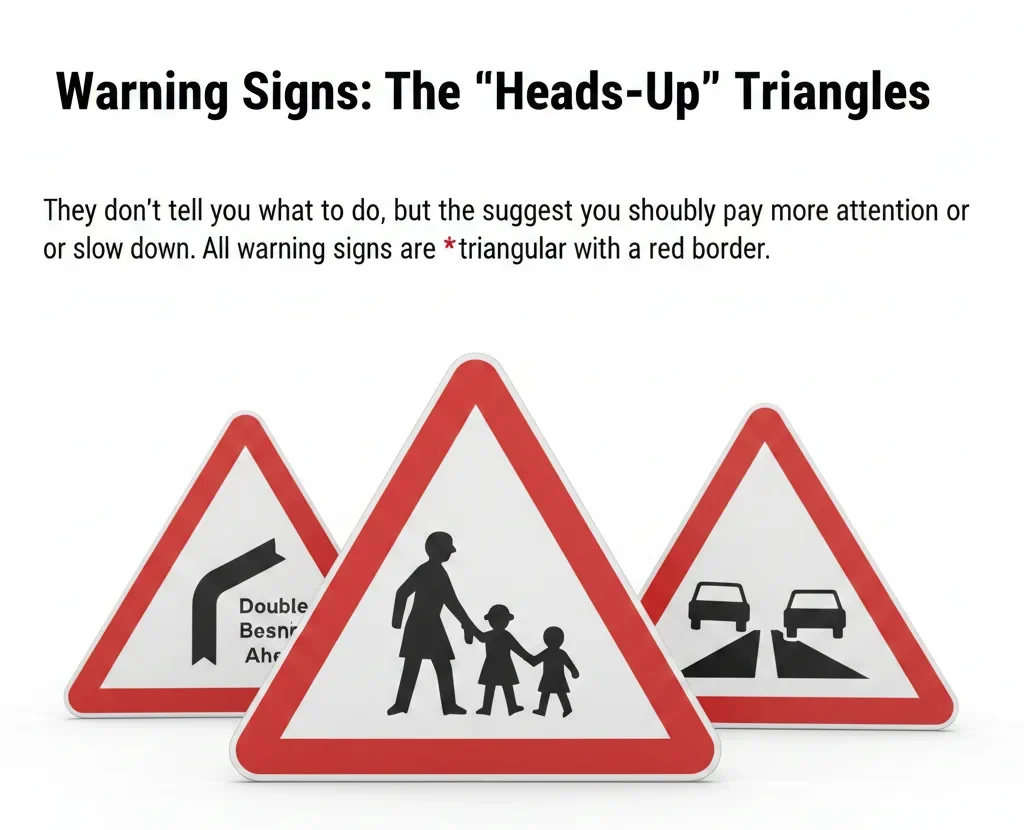
2. Warning Signs: The “Heads-Up” Triangles
Warning signs are there to tell you about potential hazards ahead. They don’t tell you what to do, but they suggest you should probably pay more attention or slow down.
All warning signs are triangular with a red border.
- Common Hazards: Double bends, school crossings, or narrowing roads.
- Why Triangles? The shape stands out against the rectangular and circular signs, catching your eye before you hit the hazard.
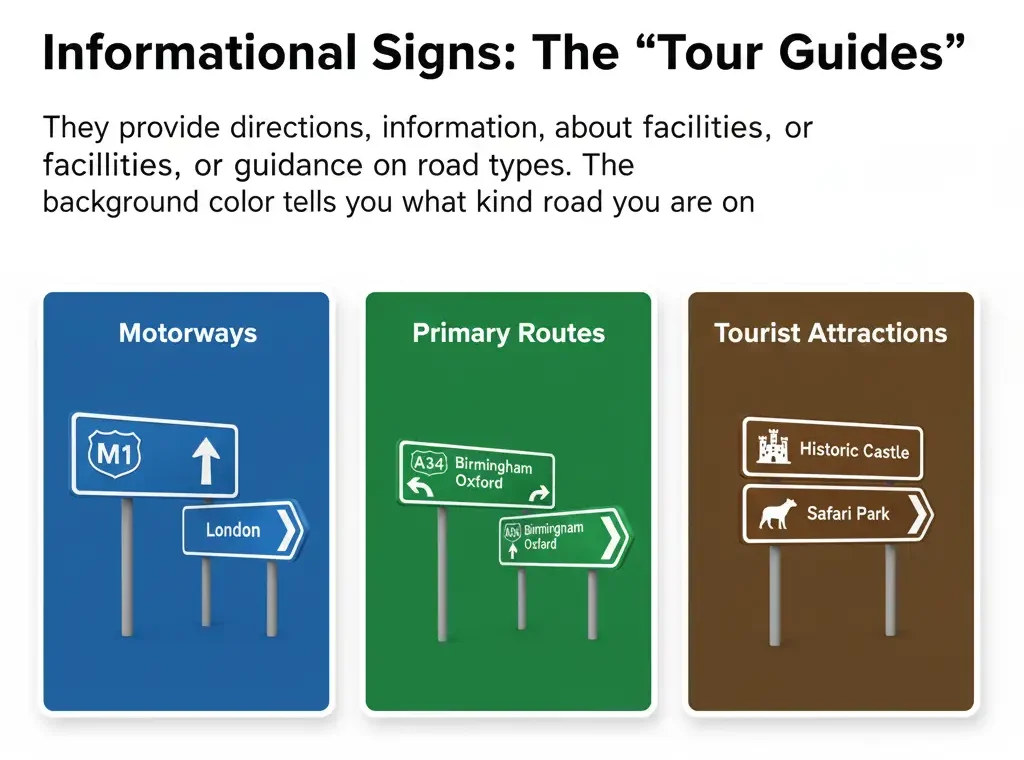
3. Informational Signs: The “Tour Guides”
Information signs are usually rectangular. They provide directions, information about facilities, or guidance on road types. The background color tells you what kind of road you are on:
- Blue Background: Motorways.
- Green Background: Primary routes (main A-roads).
- White Background: Local or minor roads.
- Brown Background: Tourist attractions (like that castle you’ve been meaning to visit).
UK Highway Code Official Website: Go To Website
UK Road Sign Shapes & Colors Explained
If you’re struggling to memorize hundreds of individual signs, just learn the Sign Grammar:
| Shape | Meaning | Example |
| Circle | Orders / Mandatory | Speed Limits, No Entry |
| Triangle | Warnings | Junctions, Narrow Roads |
| Rectangle | Information | Directions, Parking |
| Octagon | STOP | Only used for the Stop sign! |
| Inverted Triangle | Give Way | Found at junctions |
Common UK Road Signs Every Driver Must Know
Even if you aren’t a pro yet, these are the “celebrities” of the road sign world. You’ll see them everywhere.
The National Speed Limit Sign
A white circle with a black diagonal stripe. On a single carriageway, this means 60mph for cars. On a dual carriageway or motorway, it’s 70mph.
The “Give Way” Sign
An upside-down triangle. It’s one of the few signs where the shape is unique so that even if it’s covered in snow, you still know what it means.
No Waiting / No Loading
These are the yellow and red circles that tell you where you can’t park. Mastering these is the difference between a nice day out and a £70 parking ticket.
Road Signs for the UK Driving Theory Test
The Theory Test loves to trick you with signs that look similar. Around 25% of the questions can be related to road signs and markings.
Key areas to study:
- Vehicle heights and widths: Crucial for lorry and bus drivers, but car drivers need to know them too!
- Trams and Bus Lanes: These have specific blue signs that can be confusing for beginners.
- Level Crossings: There are several different signs for crossings with or without gates/barriers.
Tips to Remember UK Road Signs Easily
- Play the “Sign Name” Game: When you’re a passenger in a car, try to name every sign you pass before the car reaches it.
- Flashcards are Your Friend: Use physical or digital flashcards. Group them by shape first, then by color.
- Real-World Context: Don’t just look at a book. When you see a “Side road ahead” sign, look for the actual side road. Linking the symbol to the physical road helps the memory stick.
- The “Red = Danger/No” Rule: If it’s red, it’s either a warning of danger (triangle) or something you shouldn’t do (circle).
Common Mistakes Learners Make with UK Signs
- Confusing “No Entry” with “No Motor Vehicles”: A “No Entry” sign is a solid red circle with a white horizontal bar. A “No Motor Vehicles” sign is a red circle with a car and motorcycle inside.
- Misinterpreting Speed Limits: Remember, a speed limit sign is a limit, not a target. Also, a speed limit inside a blue circle (rare, but they exist) is a minimum speed limit!
- Ignoring the Background Colour: Forgetting that green signs are for primary routes can lead to you getting lost on tiny country lanes when you wanted the A-road.
Final Thoughts / Conclusion
Learning the UK road signing system might feel like a chore, but it’s actually the ultimate “cheat code” for driving. Once you understand that circles give orders, triangles warn, and rectangles inform, you’re already 80% of the way there.
Stay observant, keep practicing your theory questions, and soon you’ll be navigating the streets of London or the hills of the Peak District without a second thought.
Frequently Asked Questions (FAQ)
1. What is the most important road sign in the UK?
While all are important, the STOP sign and GIVE WAY sign are critical for junction safety.
2. What does a blue rectangular sign mean?
Usually, these provide information on motorways or indicate specific lanes for buses or cycles.
3. Are all UK road signs in the Highway Code?
Yes, the Highway Code contains the vast majority of signs you will encounter. Some temporary or experimental signs might appear, but they follow the same shape/colour logic.
4. Why are some signs brown?
Brown signs are specifically for tourist information, like zoos, historic houses, or football stadiums.
Ready to hit the road?
Don’t just read about it—put your knowledge to the test!
Test your knowledge with our UK road sign quiz!